By John Haslett · 13 October 2026
There is something special about finding the outline of an ancient home among Dartmoor’s open hills. At Grimspound, the granite walls and hut circles offer a remarkable connection with the people who lived and worked here thousands of years before our walking boots arrived.
Set between Hookney Tor and Hameldown, this Bronze Age settlement makes a rewarding stop on a moorland walk. Take time to explore the details, then look back from the higher ground to appreciate the scale of the enclosure.
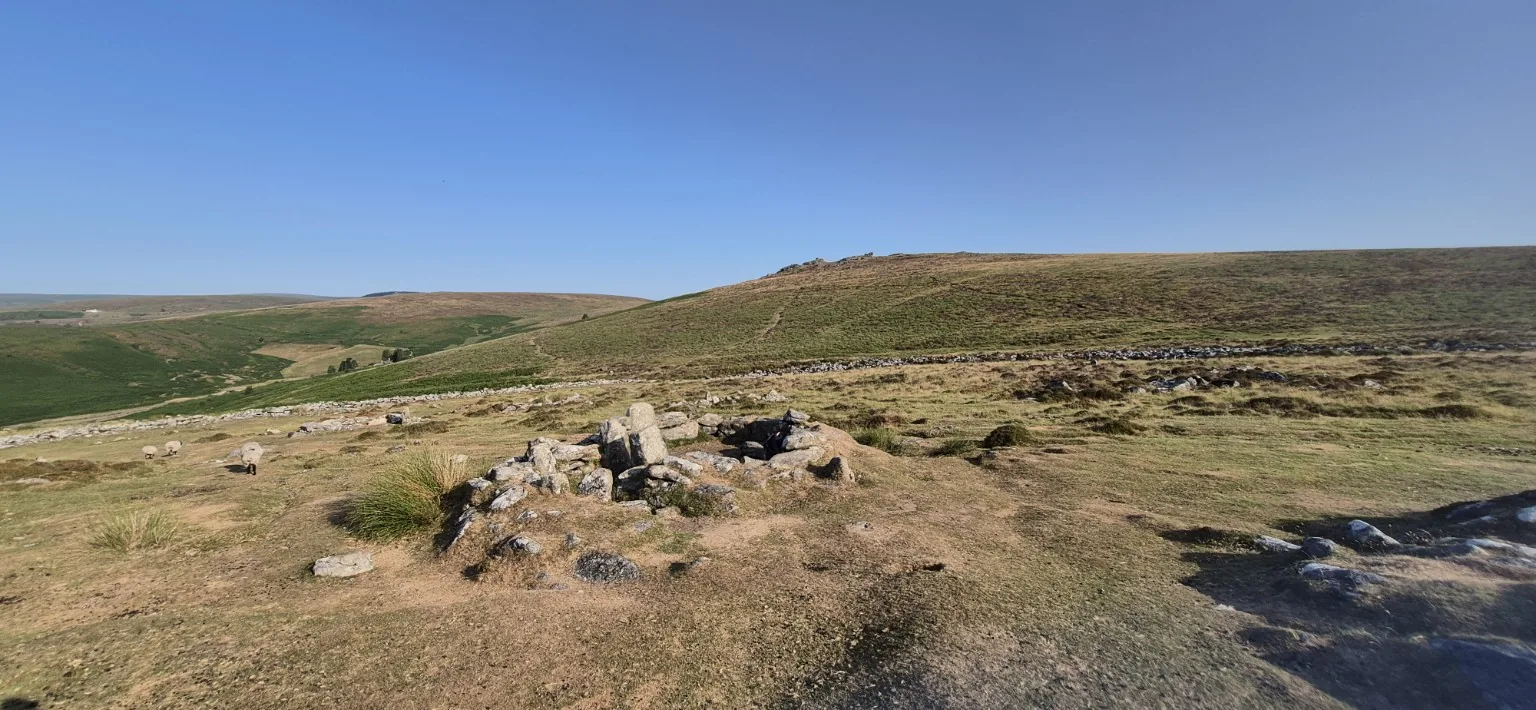
Grimspound at a glance
- What is it?
- A prehistoric settlement with 24 surviving stone hut circles inside a substantial enclosure.
- Period
- Bronze Age, over 3,000 years old. Precise occupation dates remain uncertain.
- Scale
- Approximately 1.6 hectares — about four acres — with an enclosure roughly 150 metres across.
- Location
- Between Hookney Tor and Hameldown, Dartmoor. Grid reference: SX 7007 8087.
- Access
- Free entry during reasonable daylight hours; uneven, exposed moorland terrain.
- Facilities
- No facilities on site. Bring water, food and suitable clothing.
A glimpse of Bronze Age life
Grimspound was home to a small farming community. The roundhouses would have had stone walls beneath conical roofs of turf or thatch. Doorways and porch stones still help you picture the buildings as homes, rather than simply circles on the ground.
The great boundary wall is particularly striking. Its purpose is thought to have been more practical than military: controlling livestock and keeping wild animals out. A stream through the northern part of the enclosure provided a water supply.
Excavations in the 1890s revealed pottery, flint, hearths and other traces of daily life. Parts of the houses and boundary wall were also reconstructed at that time, not always accurately, so today’s remains include later restoration.
Why did people leave?
There is no certain date or single explanation for Grimspound’s abandonment. Declining soil fertility and erosion helped change settlement patterns on the moor; a cooler, wetter climate is also often discussed in the wider story of upland abandonment. The picture is more complex than a village simply being deserted overnight.
What to look for
- The enclosure wall: follow its sweeping line across the hillside and consider the work involved in moving all that granite.
- The hut circles: look closely for entrances and porch stones, while avoiding climbing on or disturbing the remains.
- The stream: a reminder that a reliable water source mattered just as much to the settlement as shelter.
- The view from above: Hookney Tor and the high ground on Hameldown reveal the layout far better than standing inside the enclosure.
Getting there and parking
From Postbridge, follow the B3212 towards Moretonhampstead and turn right at Challacombe Cross towards Widecombe-in-the-Moor. English Heritage identifies limited roadside layby parking approximately 1.4 miles (2.2 km) after leaving the B3212. From there, continue on foot onto the moor towards Grimspound.
Use the parking location below alongside a map, rather than relying on a general postcode. Spaces are limited: park considerately and keep gateways and the road clear.
Parking: ///continues.slowly.gazette
Parking what3words supplied by English Heritage. Check its current visitor information before travelling.
John’s hiking tips
- Visit early or later in the day for a quieter, more atmospheric experience, allowing enough daylight for the return walk.
- Wear sturdy boots and carry waterproofs. The ground can be wet and uneven, and this is an exposed part of the moor.
- Bring your own water and a snack — ancient village, sadly no ancient tea room.
- Combine the visit with Hookney Tor or Hameldown. Bennett’s Cross can also feature in a longer route, planned carefully on a map.
- Keep dogs on a lead around grazing animals and leave the stones exactly as you find them.
- For a longer walk that enters Dartmoor’s military ranges, check the official firing timetable and range boundaries before setting out.
A place to pause
Grimspound adds another dimension to a day on Dartmoor. The tors and views are part of the attraction, but the real interest lies closer to your feet: the doorway of a home, the curve of a wall, and the traces of a community that once belonged to this landscape.
Give it more than a quick photograph. Wander slowly, look closely, and let the history become part of the walk.
Further reading and visitor information
Historical details and practical information checked against English Heritage: Grimspound’s history, visitor information and directions and parking. Checked 13 October 2026.